
How B2B Buyers Are Using ChatGPT and AI Tools to Shortlist Suppliers
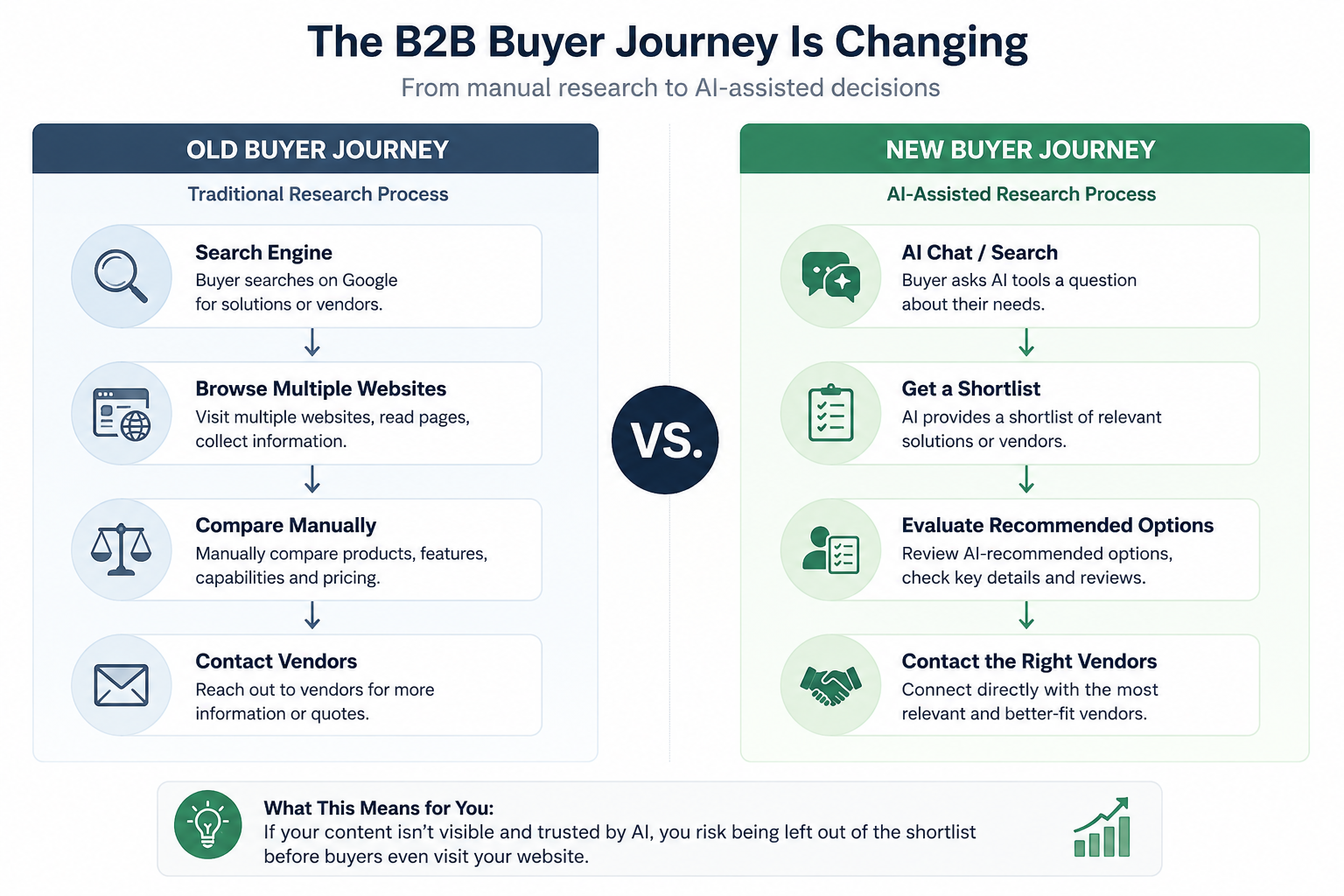
A plant manager in India needs a new servo drive supplier. Ten years ago he would have called two vendors he already knew or asked a colleague for a recommendation. Five years ago he would have typed “servo drive manufacturer India” into Google and scrolled through the blue links.
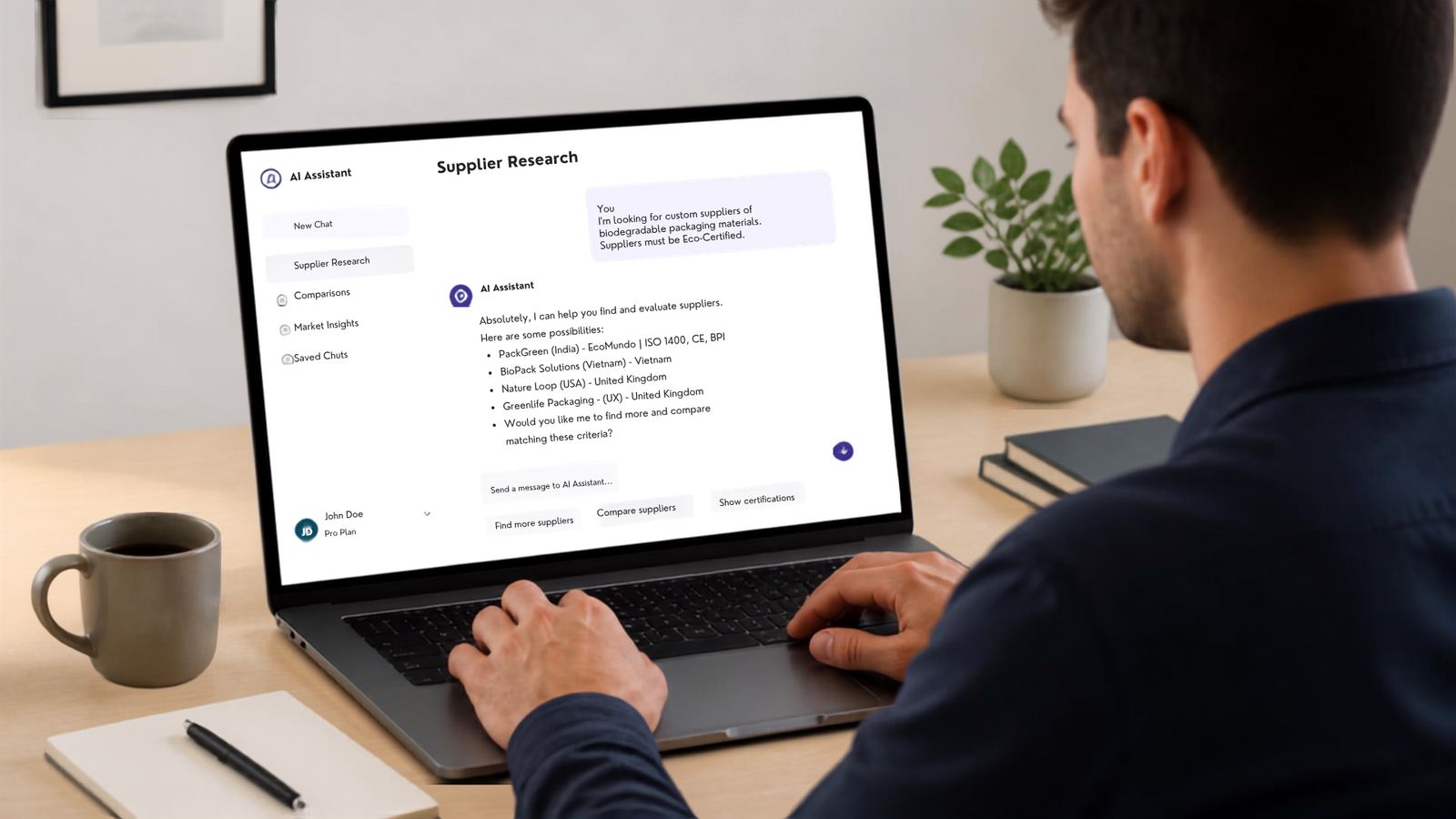
Today there’s a decent chance he’s doing something else. He opens ChatGPT and types a plain question like “which servo drive manufacturers in India are known for reliability in high-vibration environments.” He gets a short, confident answer that names three or four companies. He never visits your website. He never clicks a single link. But by the time he closes the chat, he already has a shortlist in his head.
If your company isn’t one of the names that shows up, you were never in the running. You didn’t lose the deal — you never even entered it.
This part of B2B buying has changed faster than most people in industrial and technical sectors have noticed. It’s worth understanding properly because it changes what “being visible” actually means for automation, electrical, and EV companies.
The shift is bigger than most people in industrial B2B realize
It’s easy to brush off AI search tools as something that only matters for consumer shopping or software companies — not for businesses that sell switchgear or motor control panels. The numbers say otherwise.
Research from early and mid-2026 shows a clear pattern. Forrester’s buyer journey survey, which covered nearly 18,000 global business buyers, found that AI tool use among B2B buyers has grown sharply. For software and technical purchases in particular, a large majority of buyers now turn to a tool like ChatGPT at some point while evaluating vendors. A separate G2 survey of more than a thousand B2B decision-makers found that a similar share of buyers now start their research with an AI chatbot instead of a traditional search engine.
Other studies point in the same direction. A Semrush survey of over 600 U.S. B2B professionals found that nearly everyone who uses AI tools for work says those tools have helped them discover vendors they wouldn’t have found otherwise. A large majority said AI directly shaped their final shortlist. About a third of buyers in that study said they had purchased from a company they’d never heard of before, simply because an AI tool brought it up during research.
What’s happening is straightforward: buyers are handing the early, exploratory part of their research over to a tool. The stage where they used to browse ten websites, skim a few brochures, and build a mental shortlist is now often done inside a chat window.
What actually happens when an AI tool answers a vendor question
To know what to do about any of this, it helps to understand — in plain terms — what’s going on when someone asks ChatGPT or a similar tool to recommend a supplier.
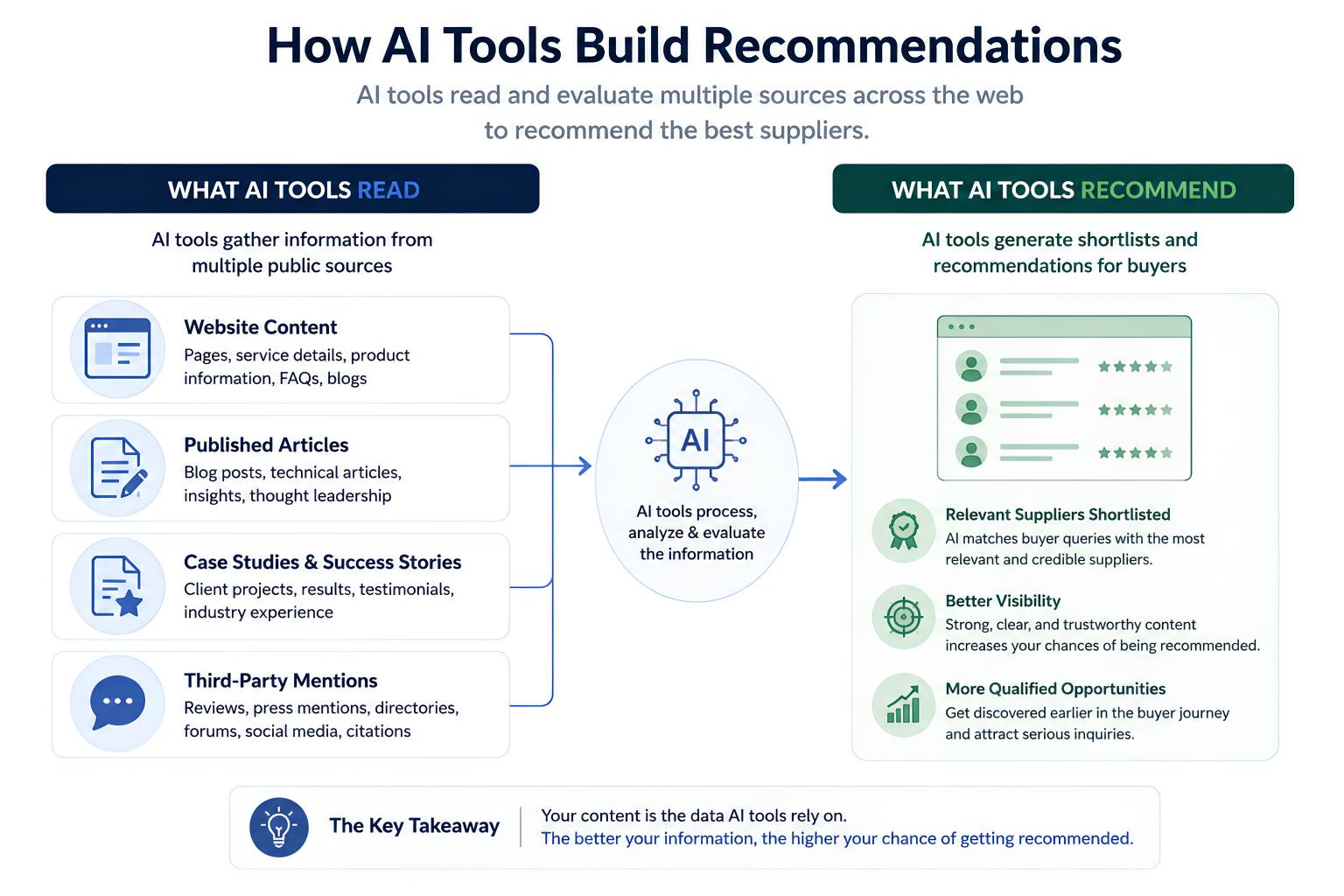
These tools don’t have a live, up-to-the-minute view of your website. When they answer a question about suppliers in a category, they draw on content they’ve already read and judged as credible — articles, comparison pages, case studies, industry publications, and other written material that’s been published and indexed. If your company has published almost nothing that a tool like this could have seen — no articles that explain what you do, no case studies, no third-party coverage — there’s very little for it to work with when your category comes up. A competitor who has published consistently, even one with a weaker product, has given these tools far more to draw from.
This is an uncomfortable finding for a lot of industrial companies because it flips an old assumption. For years many believed that a strong product and a decent website were enough, and that marketing content was a “nice to have” for companies that liked writing blog posts. AI-driven research breaks that belief. If a buyer’s shortlist is being built by a tool that only knows what’s been written down and published, then not writing anything down has become a real business risk — not just a missed marketing chance.
Research backs this up. A study from researchers at Princeton and Georgia Tech looked at what actually improves an AI tool’s chance of citing a piece of content. They found that content with specific statistics and credible sources gets cited meaningfully more often than vague, generic marketing copy. Separate analysis from Ahrefs showed that a large share of the pages ChatGPT cites most often come from sources with established authority. Being known and trusted over time genuinely matters — not just having a page that mentions the right keywords.
What B2B industrial companies can actually do about this
None of this requires reinventing your entire marketing approach. It mostly requires taking seriously something a lot of technical companies have quietly avoided for years: actually writing down and publishing what you know.
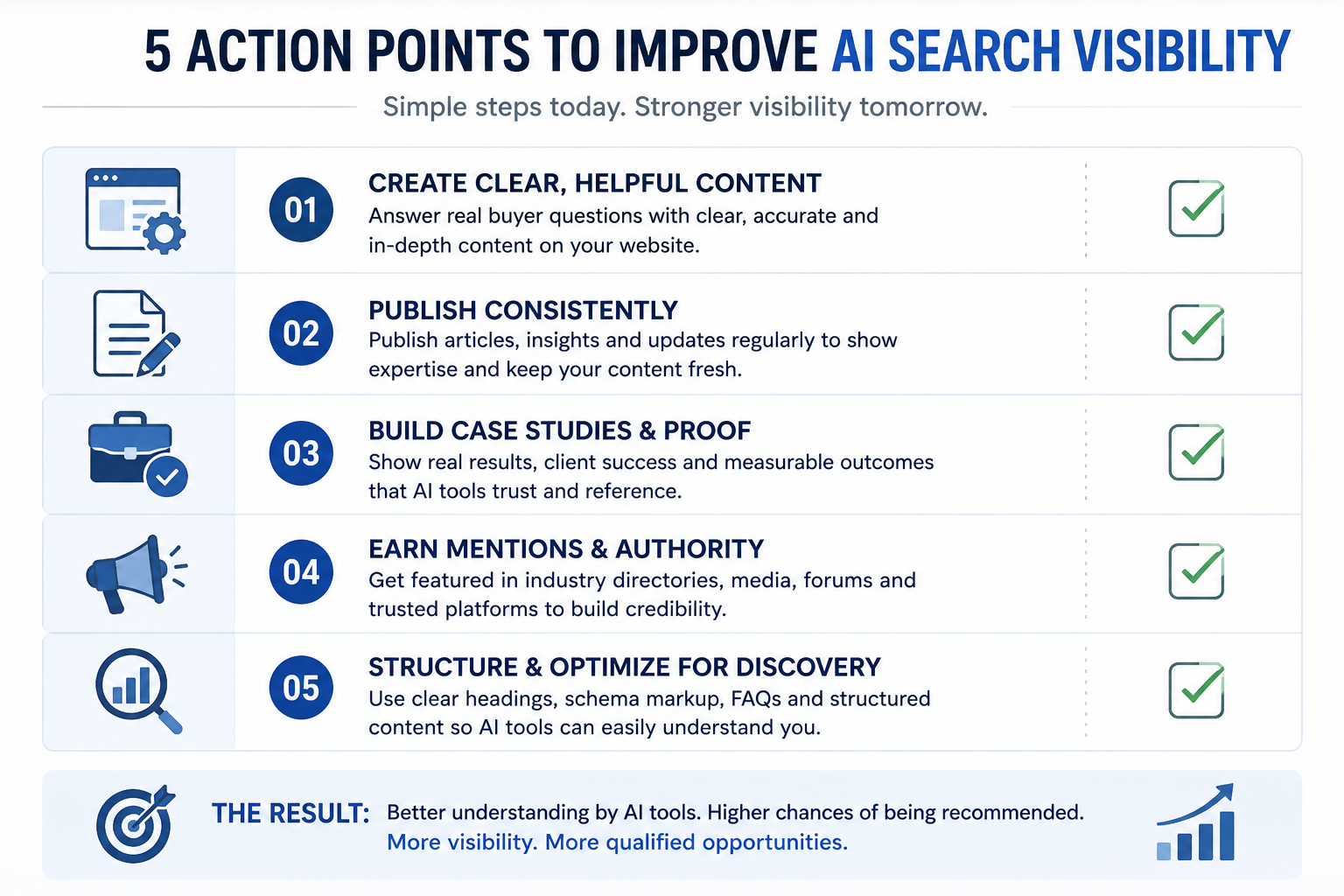
Publish real, specific, technical content — not vague marketing copy. AI tools tend to favor content that’s specific and useful over content that’s generic and promotional. An article that genuinely explains how to size a motor drive for a high-vibration environment is far more useful — to both a human reader and an AI tool summarizing the category — than a page that just says your products are “reliable and industry-leading.”
Turn your own engineers into your best content source. This is one of the most underused resources most industrial companies have. Your technical staff already know the answers to the exact questions your buyers are asking — they just haven’t been asked to write any of it down. We’ve written a separate piece on exactly how to do this well: How to Turn Your Engineers Into Your Best Marketing Asset.
Build real case studies, not vague testimonials. A specific, detailed account of a real project — the problem, what was done, and the measurable result — gives both human buyers and AI tools something concrete to point to. A generic quote like “great company to work with” gives neither of them much to work with.
Get mentioned outside your own website. Since AI tools weigh independent sources heavily, getting covered in trade publications, mentioned in industry roundups, or featured in partner and distributor content all help. These are the kinds of sources AI tools tend to trust and cite.
Be patient, but start now. Authority, in the eyes of both search engines and AI tools, builds over months, not days. Companies that start publishing consistently now will have a real head start over competitors who wait until this becomes an obvious, unavoidable trend.
Where to start if this feels like a lot
If all of this sounds like more than your team has time for on top of running the actual business, that’s exactly the gap we work in.
Our Growth Program starts with a short diagnostic — we call it the Power Audit — where we look at exactly where your company currently stands, including how visible you are to both traditional search and newer AI-driven research, and build a clear, prioritized plan from there.
If you’re not ready for a full ongoing program yet, our Project-Based Services let you start smaller — a technical article, a case study, or a small content pack — while you get a feel for how this kind of work actually plays out for your business.
Either way, the first real step is understanding who you’re actually trying to reach and how they’re researching you today. That’s exactly what we help companies in automation, electrical, and EV/renewable energy figure out first.
The bottom line
Your buyers haven’t stopped doing research before they call you — they’ve just changed where that research happens. A growing majority of B2B buyers, including technical and industrial ones, are now using AI tools somewhere in the process of finding and shortlisting suppliers. Some of them are doing it without even fully realizing how much it’s shaping their decision.
The companies that show up in those conversations aren’t necessarily the ones with the best product. They’re the ones who’ve taken the time to write down what they know, in a way that’s genuinely useful to someone trying to understand their category — and put it somewhere it can actually be found.
That’s a fixable gap. It just needs to be treated as seriously as the engineering itself.
Book a Call — let’s figure out where you currently stand, and what it would take to close that gap.